

Summer has always posed a basic question for parents: what should children do with unstructured time? In 2026, that question feels more consequential. Children are growing up in a climate of higher screen use, less outdoor time, and fewer natural opportunities for face-to-face play. A growing body of research suggests that those shifts are not trivial. More outdoor time is associated with benefits for children’s social, cognitive, and physical development, while higher screen time can displace sleep, activity, and other healthy routines.
That is what makes a strong summer day camp more than a convenience. It becomes an intervention.
Enter the Irvine Ranch Outdoor Education Center
At the Irvine Ranch Outdoor Education Center, Junior Adventure Day Camp and Adventure Day Camp are built around that premise, even if they do not describe themselves in those terms. These are general youth camps, not Scouting-only programs, and that distinction matters. They are open more broadly to families looking for a summer option that combines outdoor activity, structure, and skill-building rather than passive supervision. The center positions itself as a place for youth and groups to explore the outdoors, with summer programming anchored in zip lines, climbing, STEM activities, hiking, archery, BB shooting, swimming, and team-building experiences. Junior Adventure is designed for ages 6 to 10, while Adventure Day Camp is built for ages 11 to 17.
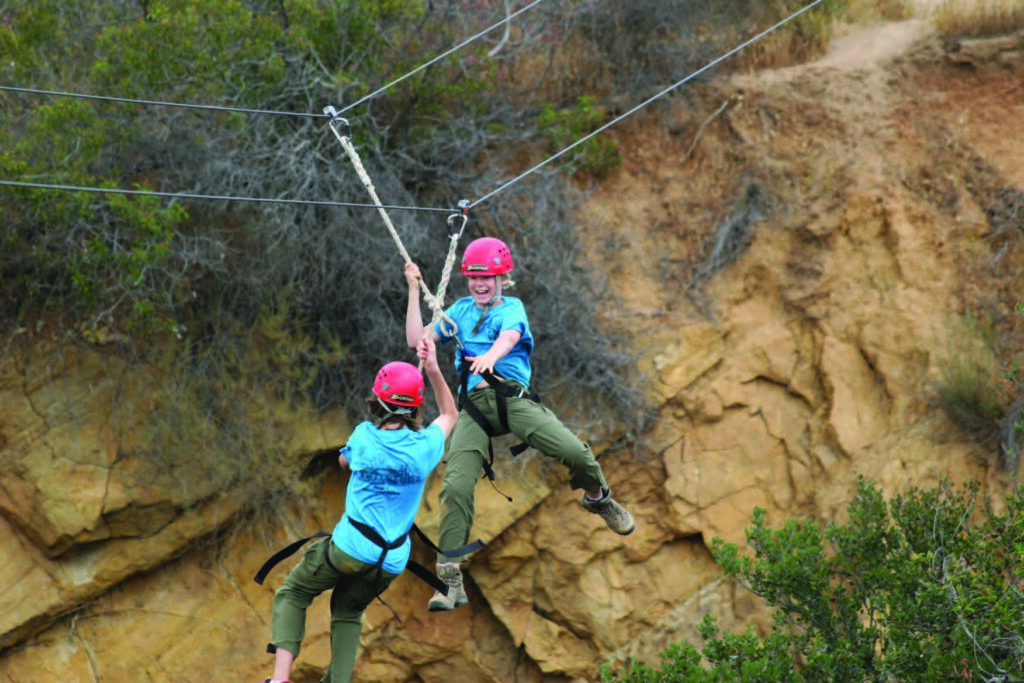
What stands out is not simply the activity list. It is the format. These camps run as full weekday programs at a local site in Orange, giving families a way to replace idle summer hours with physically active, supervised, in-person experiences. Junior Adventure Day Camp’s 2026 sessions run in multiple weeklong blocks from late June through late July, typically 8:00 a.m. to 4:00 p.m. Adventure Day Camp follows a similar weeklong structure for older youth.
What Does the Research Say?
Research on camp experiences helps explain why that matters. A 2024 peer-reviewed study found that camp participants showed gains in empathy, emotional self-control, optimism, and assertiveness in less than two weeks. The American Camp Association has also highlighted evidence that camp supports engagement, belonging, youth-adult relationships, and experiential learning.

For parents, the takeaway is practical. If the default summer pattern is more time indoors and more time on devices, then the strongest alternative is not just “something to do.” It is an environment that asks more of children. One that gets them moving, puts them in groups, places them outdoors, and gives them the chance to build confidence through real activity.
That is the case for camps like these. They are local, structured, outdoor-centered, and broad enough to appeal to families who may not be looking for a traditional specialty camp. In a crowded summer market, that makes them a serious option. In a year when many children need less screen time and more real-world engagement, it may make them one of the better ones.
Sources and Camp Pages
Junior Adventure Day Camp at OC Outdoor Adventures
Adventure Day Camp at OC Outdoor Adventures
IROEC main site
2026 Junior Adventure Day Camp registration page
2026 Adventure Day Camp registration page
2024 camp benefits study on PubMed Central
2023 review on outdoor time in children and youth
2025 study on outdoor visits and screen time
CDC article on screen time and health behaviors
American Camp Association research summary